01
Volume and capacity planning
Translate forecast volumes and production cycles into booking plans that account for equipment, carrier schedules and seasonal demand peaks.
Overview
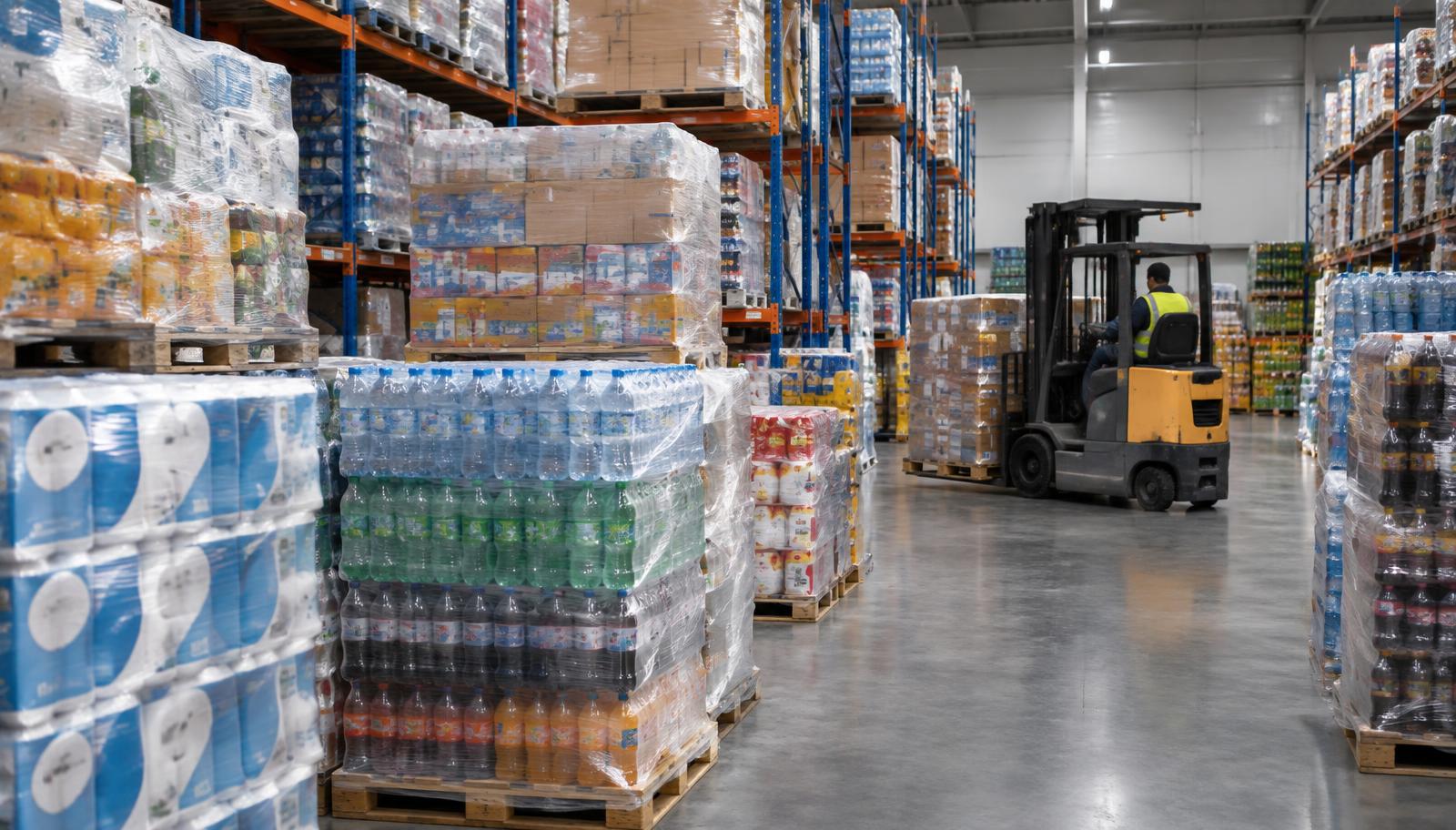
FMCG operations depend on consistent replenishment, controlled inventory and dependable handovers from manufacturers to distribution networks. FSC supports international and regional flows for packaged consumer goods, coordinating freight, customs milestones, warehousing and onward transport around customer demand and receiving capacity.
Shipment planning can account for product shelf life, packaging configuration, pallet and container utilisation, seasonal peaks and destination requirements. Where products require temperature control or regulated handling, service design should confirm the applicable specification, monitoring and local compliance before booking.
With 2.1 million square metres of warehouse space across 140 facilities, FSC can support storage and distribution planning alongside ocean, air and inland transport. Clear milestones and exception escalation help supply-chain teams respond to changing demand without losing sight of cost, service and product integrity.
HIGH-VELOCITY SUPPLY
Coordinate freight and distribution around repeatable product flows, market requirements and demand variability.
Translate forecast volumes and production cycles into booking plans that account for equipment, carrier schedules and seasonal demand peaks.
Assess storage and distribution options near key markets to support replenishment while balancing inventory availability and holding requirements.
Confirm packaging, palletisation, temperature or segregation requirements before cargo moves, with handling instructions shared across relevant parties.
Coordinate commercial and transport documents with brokers and destination partners, recognising that import rules differ by product and country.
Plan collection, cross-dock or delivery legs against vehicle capacity, loading constraints, appointment windows and receiving-site requirements.
Review planned and actual milestones, volume patterns and recurring exceptions to inform corrective action and future replenishment cycles.
ILLUSTRATIVE OPERATING PROFILE
How it works
Connect forecast, cargo readiness and destination capacity in a controlled operating sequence.
Confirm forecast volume, product characteristics, destination receiving limits and inventory priorities for the planning period.
Agree routing, mode, equipment and booking windows, incorporating shelf-life or special handling needs where applicable.
Verify packing lists, weights, marks, shipping instructions and destination document requirements before dispatch.
Monitor transport and clearance milestones, then align warehouse receiving, inland capacity and delivery appointments.
Compare plan with actual flow, investigate recurring delays and adjust future bookings or inventory positioning.
Reference
| Flow | Key planning input | Operational focus | Potential service |
|---|---|---|---|
| Ambient packaged goods | Forecast and pallet profile | Container utilisation and receiving slots | Ocean and contract logistics |
| Short shelf-life products | Remaining shelf life at delivery | Transit buffer and destination handling | Time-defined transport |
| Temperature-sensitive goods | Validated temperature range | Equipment, monitoring and handover | Reefer / cold-chain assessment |
| Promotional peak | Campaign dates and uplift | Capacity reservation and staging | Ocean, air or inland options |
| Multi-market distribution | Country rules and allocation | Customs data and local delivery | Multimodal and warehousing |
In operation
FSC connects international transport with warehousing and inland delivery options for recurring consumer-goods flows. Service plans are shaped around product attributes, market requirements and the agreed operating model.

Freight and fulfilment in step


Case study
Demand peaks across several markets created uneven booking volumes and pressure on destination receiving capacity.
FSC coordinated a rolling booking plan, shared cargo-readiness milestones and aligned warehouse and inland delivery windows with the manufacturer's distribution partners.
FAQ
Can't find what you're looking for? Our specialists are available around the clock.
Contact our teamKeep exploring
Supply ChainFlexible 3PL and 4PL warehousing and distribution services connect inventory operations with transport and supply chain control.
Explore Supply Chain
Customs clearance, HS classification support and trade compliance coordination for international shipments.
Explore Consumer & Retail
Coordinate seasonal fashion flows with ocean, air and fulfilment options designed around launch dates, inventory turns and returns.
Explore
Discuss your FMCG product flows, handling requirements and destination network with FSC.