01
Labour standards
No forced or child labour, fair wages and working hours, and freedom of association in line with international principles.

Overview
Most of the transport and services we provide involve partners — carriers, hauliers, terminals, warehouses and technology suppliers. Our Supplier Code of Conduct sets the standards we expect from them so customers can trust the whole chain, not only the parts we operate directly.
The Code covers human rights and labour standards, health and safety, business ethics and anti-corruption, environmental management and data protection. Suppliers are expected to apply equivalent standards to their own subcontractors.
Compliance is supported through risk-based due diligence at onboarding, periodic assessments, and corrective action plans where gaps are found. Serious breaches can lead to suspension or termination of the relationship.
Global
supplier expectations
How we work
Our teams connect operational decisions with measurable priorities and clear communication.
No forced or child labour, fair wages and working hours, and freedom of association in line with international principles.
Safe equipment, trained personnel and incident reporting across transport, handling and storage activities.
Zero tolerance for bribery and corruption, with accurate records and respect for sanctions and trade controls.
Suppliers are expected to manage environmental impacts and share activity and fuel data for emissions reporting.
Customer and shipment information must be handled securely and only for the agreed purpose.
Risk-based due diligence, periodic assessment and corrective action plans keep standards in place over time.
Performance & context
How it works
A consistent process helps translate priorities into decisions, delivery and review.
Capture origin, destination, transport mode, cargo weight and relevant shipment or service details. Confirm whether the requested estimate covers a single leg or a multi-leg logistics chain.
Identify included activities and lifecycle scope. For comparable logistics-chain reporting, apply consistent boundaries and disclose exclusions, allocation choices and any material data limitations.
Calculate transport activity and apply appropriate mode-specific emissions factors. The GLEC Framework provides logistics emissions accounting guidance and is aligned with ISO 14083 requirements for quantifying and reporting transport-chain emissions.
Check units, assumptions and available data quality, then interpret the result as an estimate. Retain supporting inputs and do not present indicative outputs as independently verified inventory figures.
Reference
| Consideration | Why it matters | Practical response |
|---|---|---|
| Scope | Defines what is included | Agree boundary before comparison |
| Operational context | Availability differs by route and provider | Confirm details with the service team |
| Evidence | Supports credible decisions | Keep source records and assumptions |
| Review | Conditions and data can change | Reassess periodically |
In operation
Our sustainability work depends on collaboration across the logistics chain. Fast Safe Cargo teams can discuss supplier code of conduct priorities, operational context and available information for your requirements.
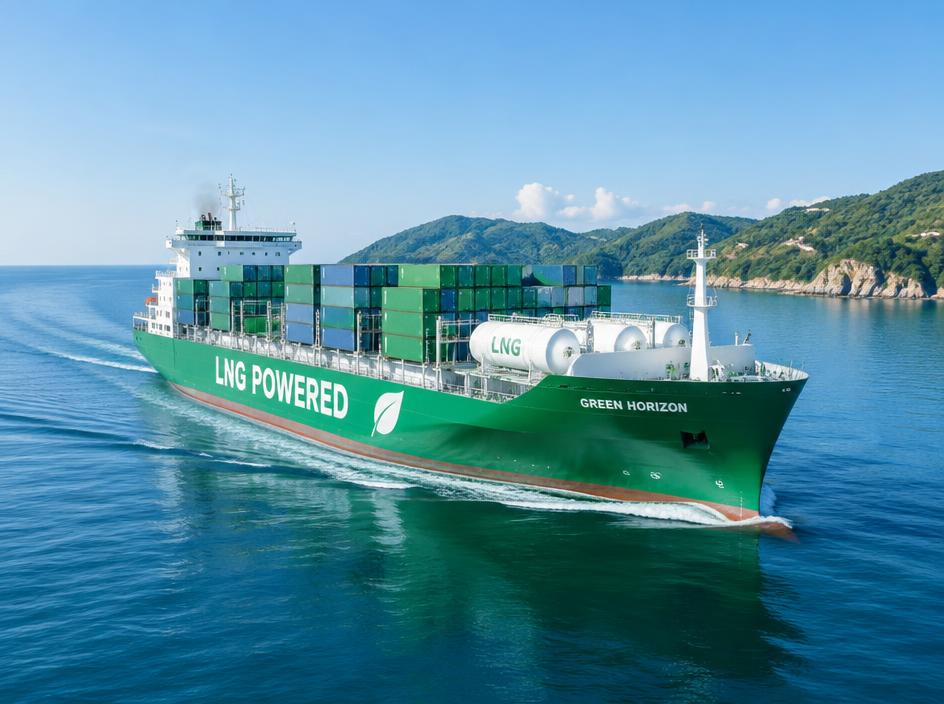
Working together on progress

FAQ
Can't find what you're looking for? Our specialists are available around the clock.
Contact our teamKeep exploring
Our CommitmentHow climate considerations shape our network planning, procurement, operations and governance across 54 countries.
Explore People & Planet
Investing in our 6,200 people and the port communities we serve through safety, skills, inclusion and local programmes.
Explore Policies
This Code sets the standards of integrity, respect and responsible conduct expected of everyone acting for Fast Safe Cargo (FSC).
Read documentShare your route, operational priorities and reporting needs so we can identify relevant information and practical next steps.