01
Classification coordination
Review shipper-provided product and safety data to coordinate the correct transport classification, proper shipping description and applicable mode requirements.
Overview
Chemical logistics begins with accurate identification of the product and its transport classification. FSC coordinates shipments in accordance with applicable modal rules and local requirements, using shipper-provided safety data and cargo details to assess packaging, equipment, documentation and handling before booking.
For ocean movements, the International Maritime Dangerous Goods (IMDG) Code governs the transport of dangerous goods by sea. Depending on classification and packaging, requirements may include a dangerous goods declaration, correct marks and labels, segregation, stowage and emergency information. The shipper remains responsible for accurate classification and declarations; carrier acceptance and route restrictions also apply.
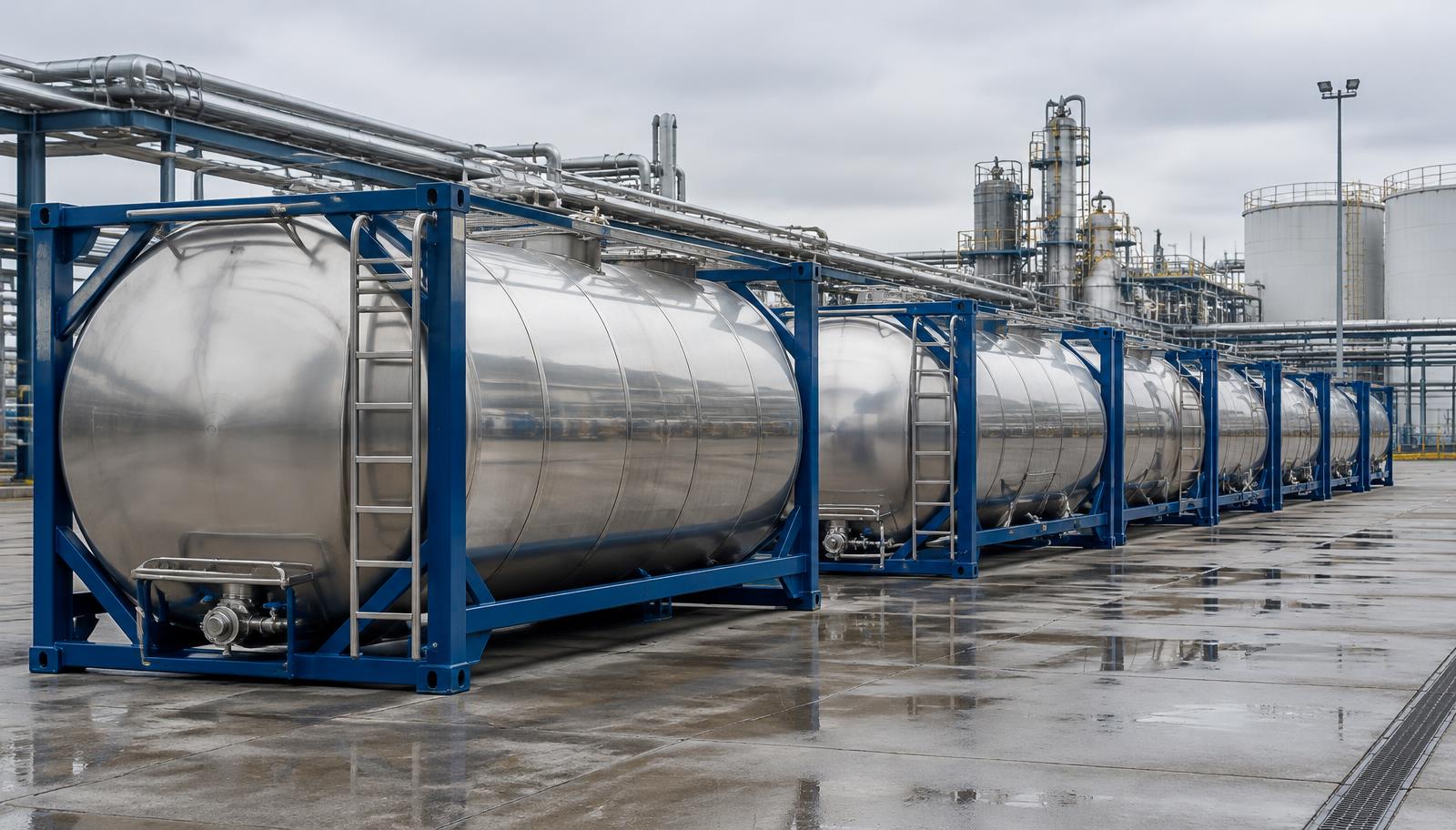
Bulk liquid chemicals may move in suitable ISO tanks when product compatibility, tank specification, cleaning status, filling limits and route acceptance are confirmed. FSC can coordinate tank positioning, movement and documentation with qualified operators. SQAS certification supports the company's logistics assessment framework, but does not replace product-specific legal compliance or customer qualification.
SQAS
logistics assessment certification
SAFE, COMPLIANT MOVEMENT
Confirm chemical identity, applicable transport rules and equipment compatibility before cargo is tendered.
Review shipper-provided product and safety data to coordinate the correct transport classification, proper shipping description and applicable mode requirements.
Coordinate ocean dangerous-goods declarations, marks, labels, emergency details and supporting documents in line with applicable acceptance and stowage rules.
Assess tank type, product compatibility, technical specification, cleaning status, loading limits and route acceptance with qualified equipment providers.
Identify segregation, co-loading and handling constraints using the product classification and applicable rules, with requirements communicated across handovers.
Check carrier, port, transit and destination restrictions, including any permits or import conditions that could affect the intended route.
Define handling instructions, emergency contacts, incident escalation and responsibilities with the shipper, operator and receiving facility.
ILLUSTRATIVE EQUIPMENT PROFILE
How it works
No booking proceeds on assumptions: product, packaging, equipment and route requirements are checked at each stage.
Obtain current safety data, proper shipping name, UN number where applicable, class, packing group and other relevant transport details.
Validate packaging approvals, marks, labels or ISO tank specification, compatibility, inspection and filling requirements for the product.
Review carrier, port, mode, segregation, stowage, transit and destination restrictions before booking confirmation.
Coordinate declarations, emergency information, shipping instructions and handling contacts with all relevant parties before cargo tender.
Track shipment milestones, maintain escalation contacts and reconcile delivery and equipment records under the agreed procedure.
Reference
| Shipment type | Key confirmation | Documentation / control | Operational check |
|---|---|---|---|
| IMDG packaged DG | UN number, class, packing group | DG declaration, marks and labels | Carrier acceptance and stowage |
| ISO tank liquid | Product-tank compatibility | Tank specification and cleaning status | Filling limits and route suitability |
| Non-regulated chemical | Classification basis and product data | Commercial and safety documents | Destination import requirements |
| Temperature-sensitive chemical | Validated temperature range | Handling and monitoring instructions | Equipment and power continuity |
| Cross-border restricted product | Country and transit permissions | Permits and regulatory filings | Route and transhipment restrictions |
In operation
FSC coordinates chemical transport requirements with shippers, carriers, equipment providers and destination operations. Product classification, acceptance and legal obligations must be confirmed for each shipment and route before tender.
Careful coordination from origin to destination


Case study
The producer needed to ship packaged regulated products and bulk liquid chemicals to multiple markets with different carrier acceptance and tank requirements.
FSC coordinated product data review, IMDG documentation readiness, ISO tank compatibility checks and route-specific acceptance confirmation with the relevant operating partners.
FAQ
Can't find what you're looking for? Our specialists are available around the clock.
Contact our teamKeep exploring
 Specialised
Coordinate regulated dangerous goods with classification-led planning, compliant documentation and mode-specific handling controls.
ExploreOcean FreightOcean freight connecting global markets with coordinated container, temperature-controlled and specialised cargo services.
Explore Supply Chain
Customs clearance, HS classification support and trade compliance coordination for international shipments.
Explore
Provide the product classification, equipment needs and proposed route for an FSC logistics assessment.