01
Cargo data verification
Review certified dimensions, weight, centre of gravity, lifting points and technical drawings to establish a sound basis for transport and equipment selection.
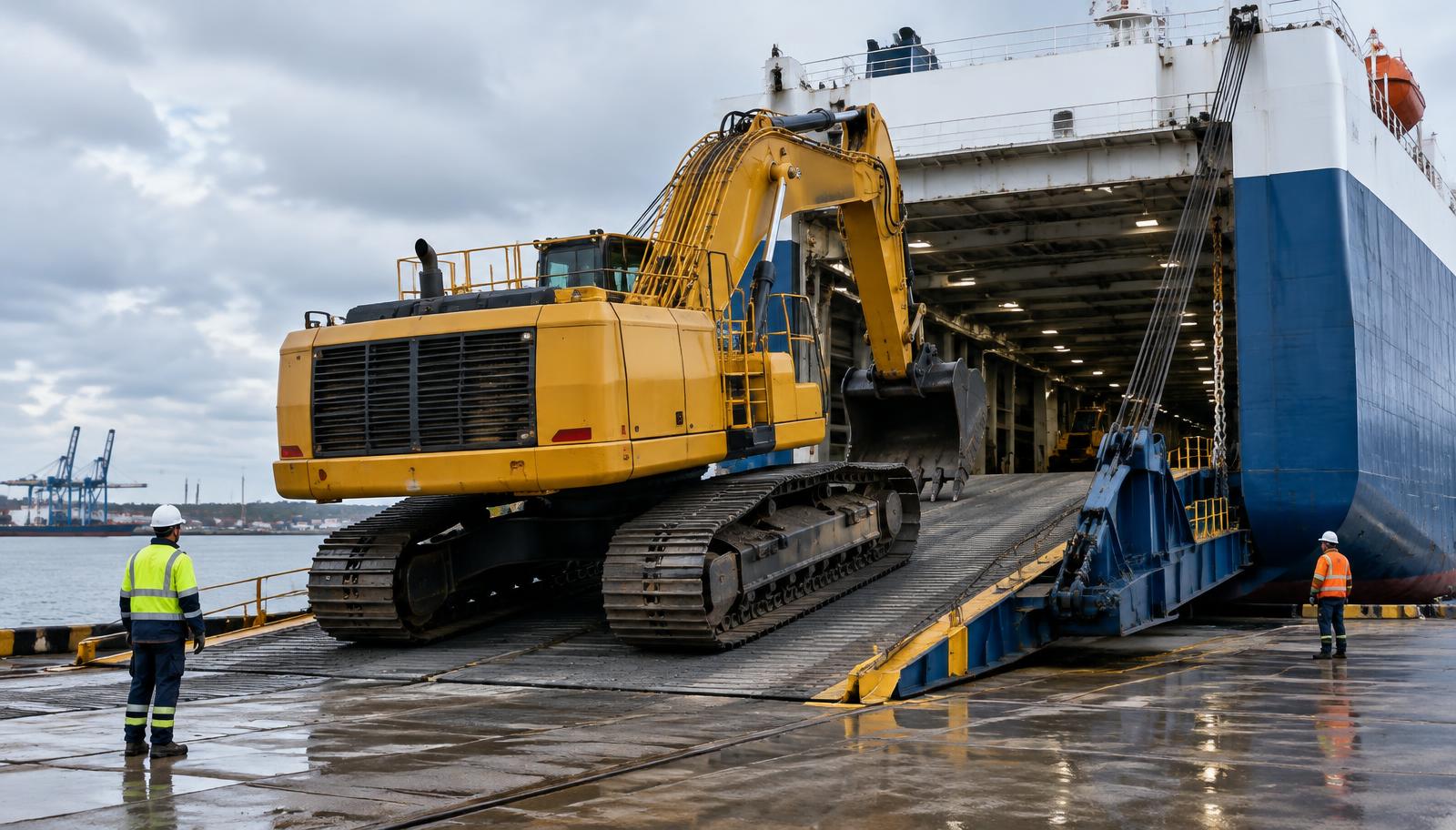
Overview
Industrial machinery can exceed standard container dimensions or weight limits, and its transport may depend on lifting points, centre of gravity, disassembly options and route constraints. FSC coordinates project logistics planning from cargo data and origin access through port handling, ocean or multimodal movement and final delivery.
A sound plan starts with verified dimensions and weights, equipment drawings, packing and securing requirements, lift studies where required, and a survey of transport interfaces. Route feasibility must consider road limits, bridges, turning radii, permits, port capability, vessel availability and the destination site's access and foundation conditions.
FSC's owned and chartered fleet ranges from 1,700 to 15,000 TEU, while project and heavy cargo requirements may call for specialist vessel, breakbulk or heavy-lift solutions sourced according to cargo and route. Scope, engineering responsibilities and contingencies are defined with the shipper and relevant local specialists.

420+
ports called
PROJECT ENGINEERING
Coordinate cargo engineering, transport feasibility and site readiness across the complete movement.
Review certified dimensions, weight, centre of gravity, lifting points and technical drawings to establish a sound basis for transport and equipment selection.
Assess out-of-gauge envelopes, load distribution, securing methods and interfaces between road, port, vessel and destination handling equipment.
Coordinate appropriate lift plans, equipment and operational responsibilities with qualified local contractors and facility operators.
Evaluate road geometry, bridge and axle limits, permits, port access, weather exposure and site approach before committing to a movement plan.
Compare containerised, breakbulk, heavy-lift and other suitable solutions based on cargo dimensions, handling needs, schedule and route availability.
Maintain milestone plans, interface responsibilities, document registers and risk reviews so stakeholders can manage dependencies and change.
PROJECT PLANNING
How it works
Progress from verified cargo data to route approval and coordinated execution.
Collect drawings, dimensions, weight, centre of gravity, lifting points, packing status and origin and destination constraints.
Compare equipment, mode, vessel and handling options against cargo, route, schedule, budget and operational constraints.
Coordinate route and site surveys, engineering reviews, permits, port approvals and contractor method statements as required.
Confirm readiness at each handover, monitor milestones and manage changes through agreed project contacts and escalation procedures.
Coordinate final positioning or offloading, reconcile transport records and document lessons for subsequent project movements.
Reference
| Cargo profile | Potential solution | Required information | Key constraint |
|---|---|---|---|
| Container-compatible machinery | FCL / flat rack | Dimensions, weight, securing points | Equipment limits and loading access |
| Long or wide modules | Breakbulk / project vessel | Certified drawings and lift points | Vessel and port capability |
| Very heavy components | Heavy-lift vessel / engineered move | Weight distribution and centre of gravity | Crane capacity and lift method |
| Factory-to-site movement | Multimodal project transport | Route survey and site access | Permits, bridges and geometry |
| Sensitive precision equipment | Specialist packing and controlled handling | Shock, tilt and environmental limits | Handling chain and monitoring needs |
In operation
FSC coordinates the transport interfaces that connect factory, port, vessel and project site. Engineering, equipment suitability and local approvals are confirmed for each cargo and route before execution.
Project cargo at every interface


Case study
A production-line expansion required oversized modules from several origins, with restricted site access and a fixed installation sequence.
FSC coordinated cargo data reviews, route surveys, port handling plans and a sequenced delivery schedule with local transport and site teams.
FAQ
Can't find what you're looking for? Our specialists are available around the clock.
Contact our teamKeep exploring
Ocean FreightEngineered transport planning for oversized, heavy and complex cargo requiring coordinated multimodal execution.
ExploreOcean FreightBreakbulk shipping for large or irregular cargo units that require specialist vessel, port and lifting coordination.
Explore Air & Multimodal
Reliable inland trucking connects ports, airports, terminals, warehouses and delivery locations across domestic and cross-border routes.
Explore
Share cargo drawings, dimensions and route details so FSC can assess a project logistics approach.